
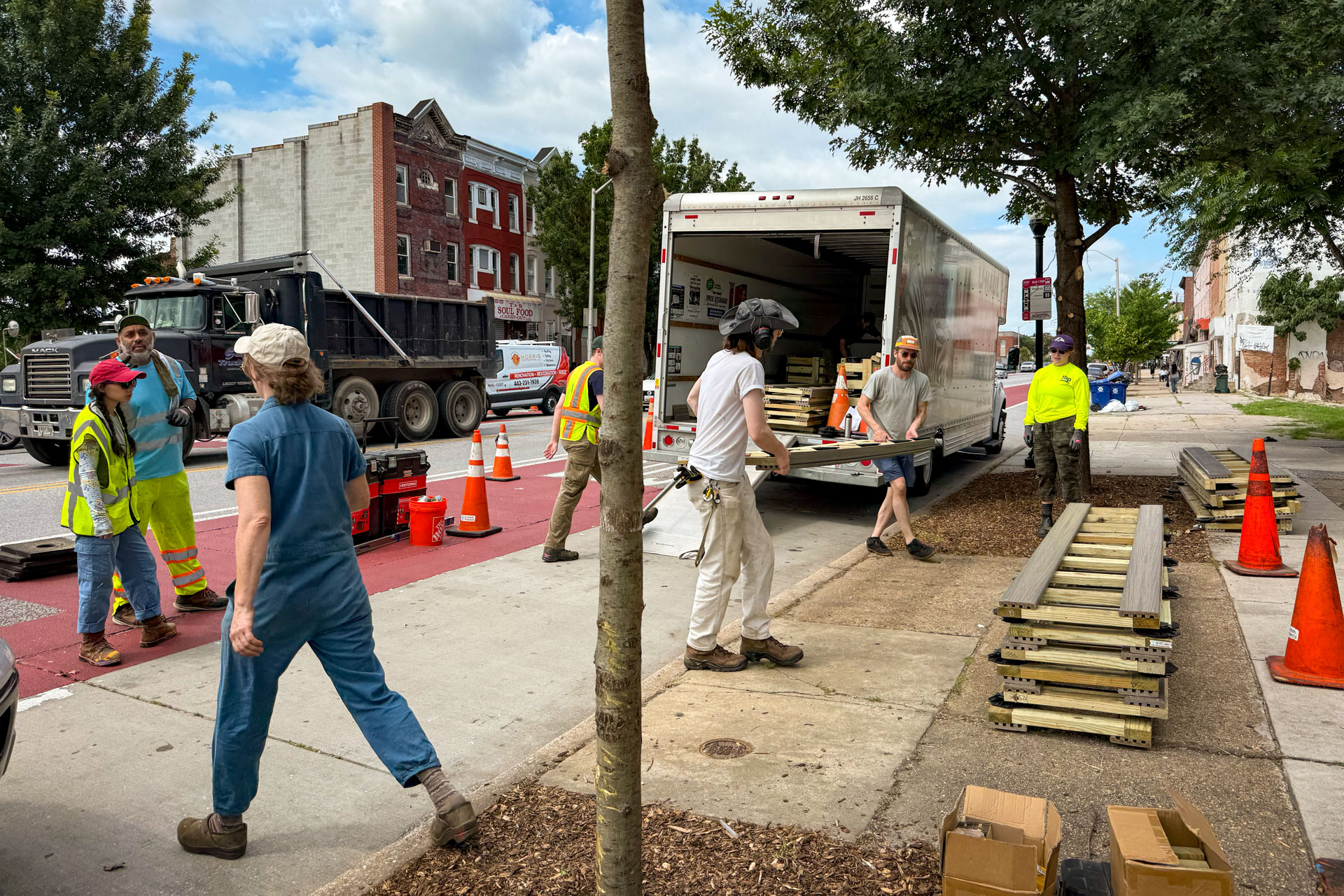
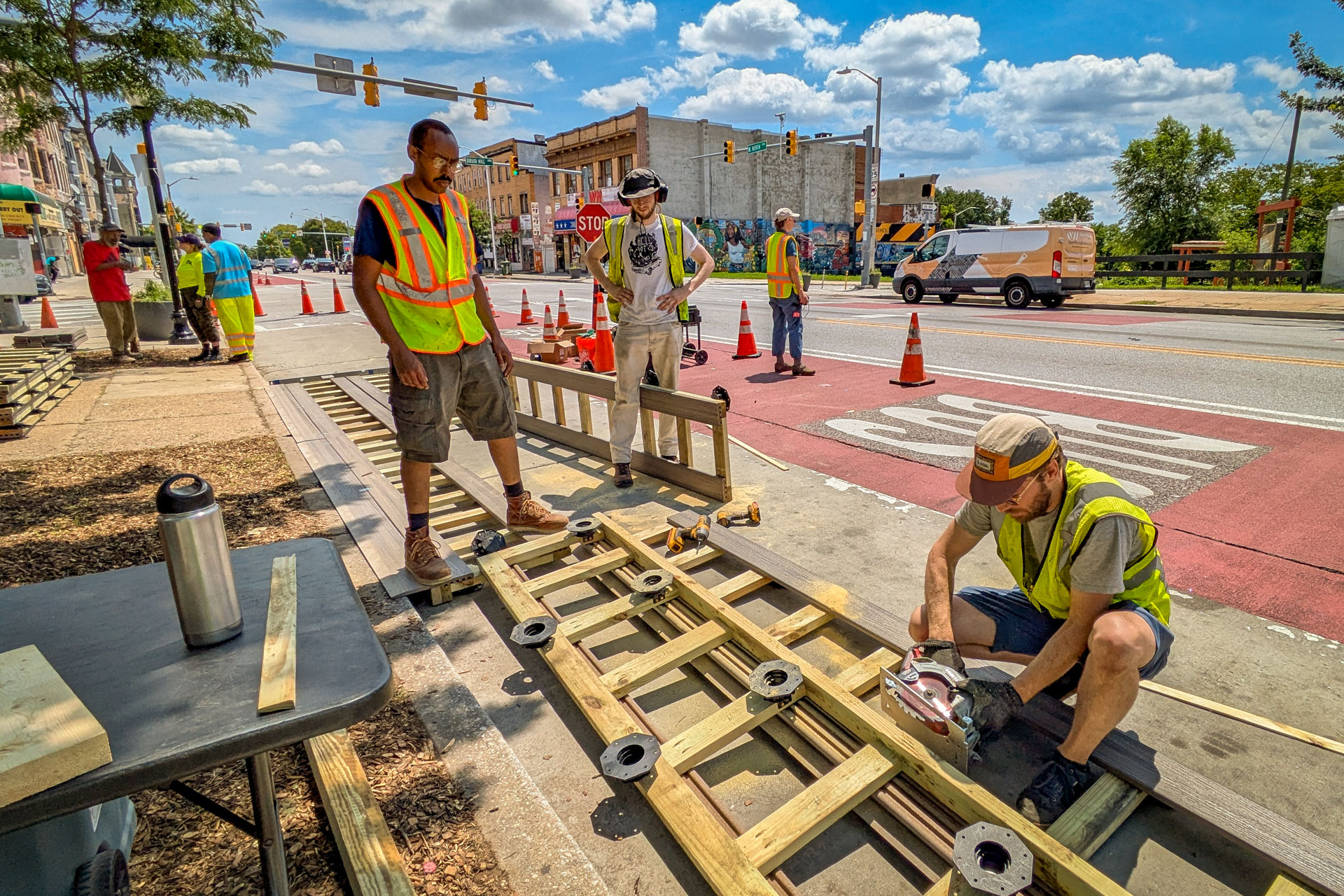



West North Avenue is a vital corridor for Baltimore, but its wide roads and fast-moving cars can make it challenging for those walking or using public transit. This installation is part of a larger project to reimagine West North Avenue as a safer, more accessible corridor through public art and placemaking—a collaboration between the West North Avenue Development Authority, Graham Projects, and OpenWorks. The Transit Access and Pedestrian Safety Improvements (TAPSI) project at North Avenue and Druid Hill Avenue improves accessibility for bus riders and pedestrians through the addition of quick-build elements. The “quick-build” approach entails designing and constructing changes to the streetscape using less expensive materials that can be modified as needed.
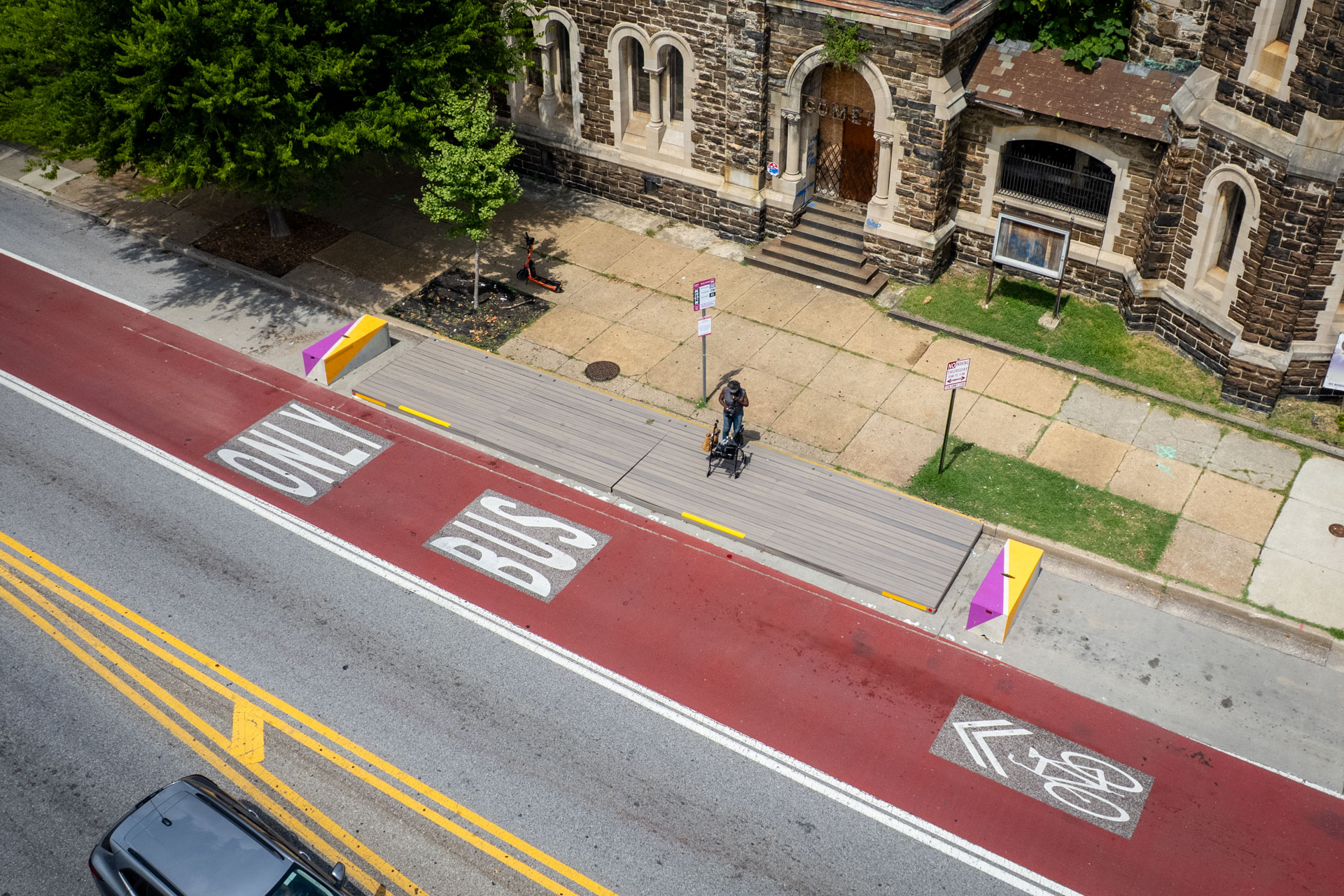
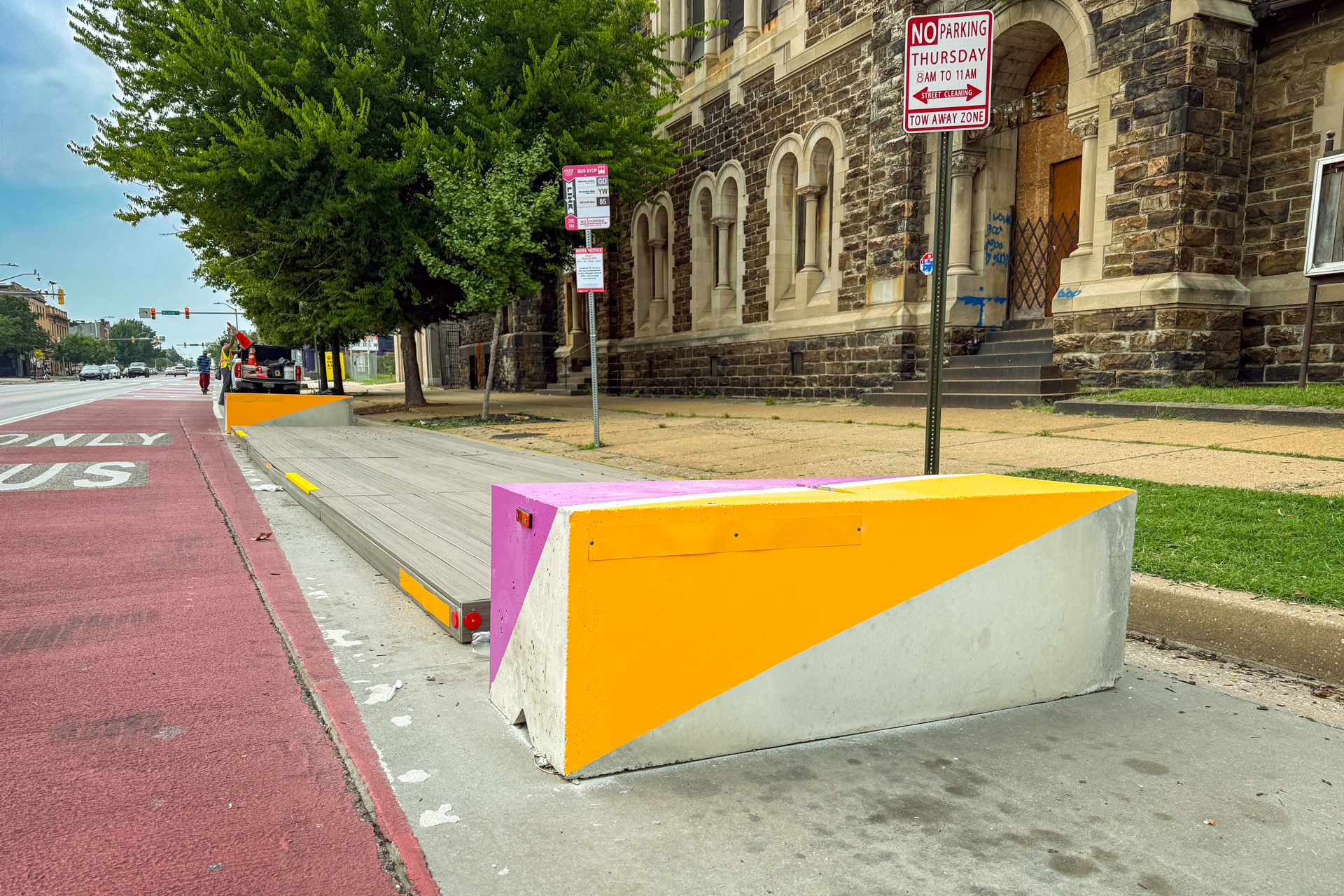
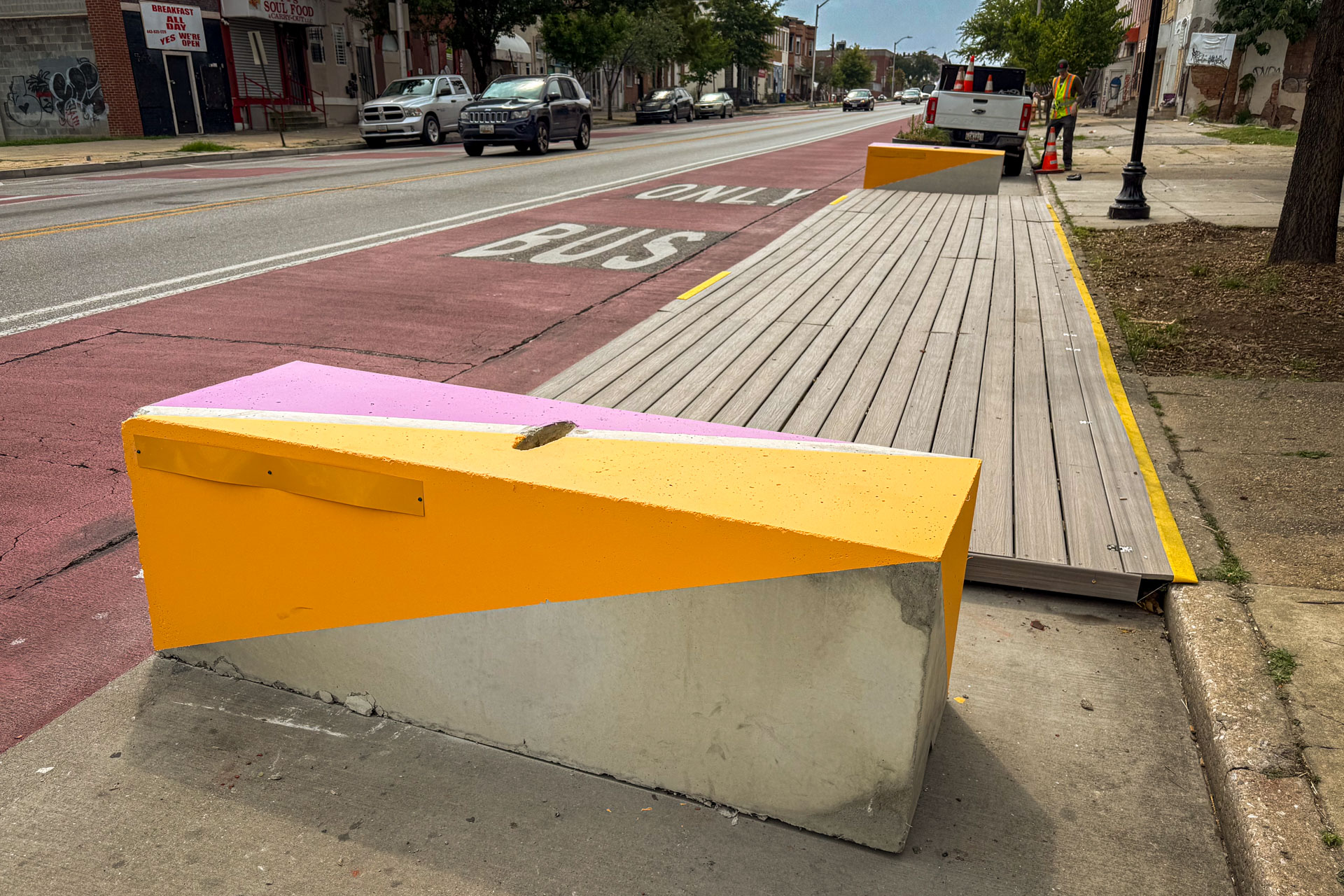
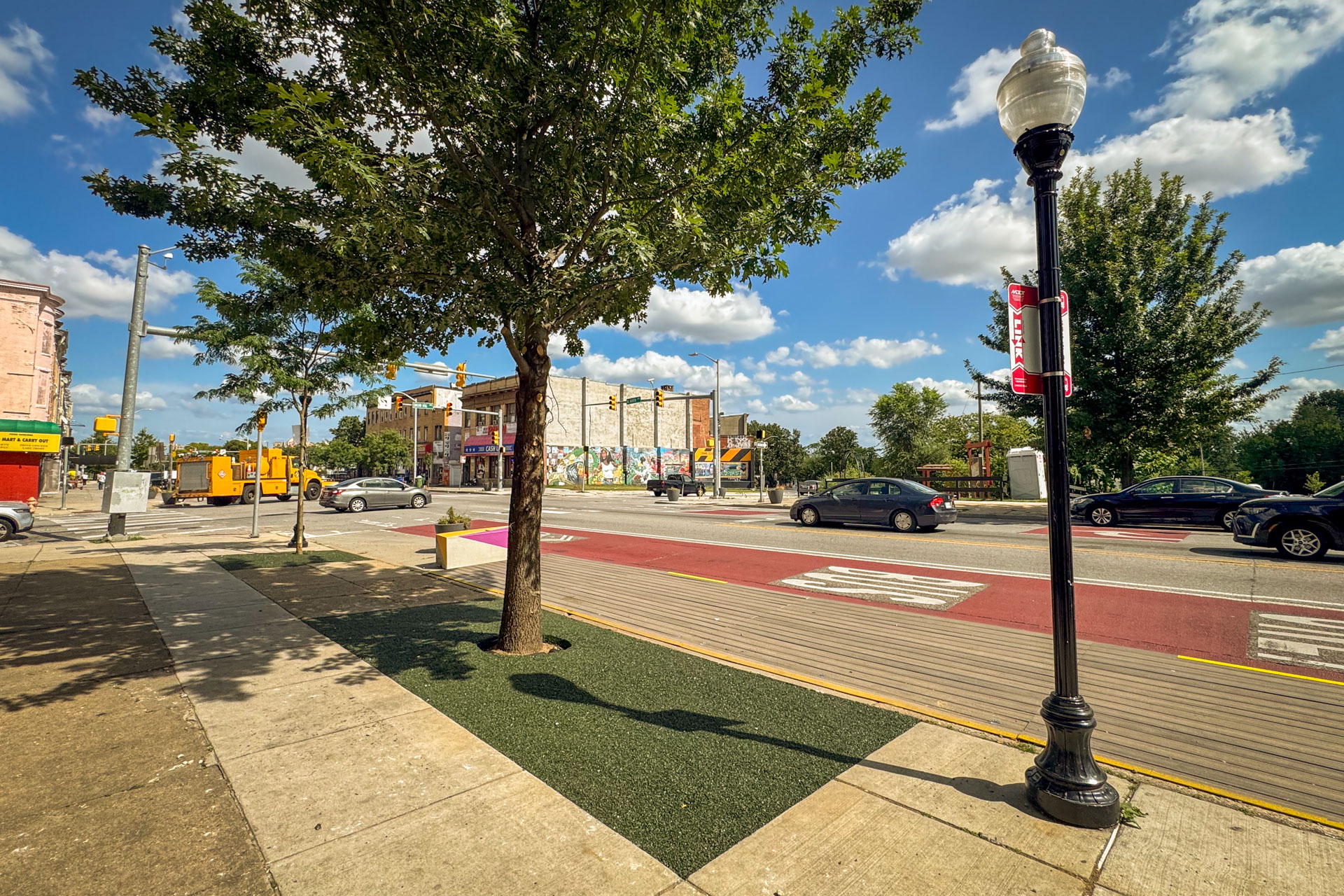
Graham Projects and OpenWorks designed, built and installed three floating bus platforms and rubberized tree pit surfacing to increase accessibility for bus riders and improve ease of bus use. Deck-like, ADA accessible bus platforms made by OpenWorks were positioned at three bus stops along North Avenue. These wheelchair accessible platforms were leveled with and effectively widen the sidewalks into the curb lanes which speeds up bus headways by enabling “in-lane” boarding. In-lane boarding is when the bus stops in its own lane rather than having to take extra time to pull over to pick up riders. The bus platforms are also protected from cars by concrete blocks painted in bright colors for beauty and accented with reflectors for nighttime legibility.
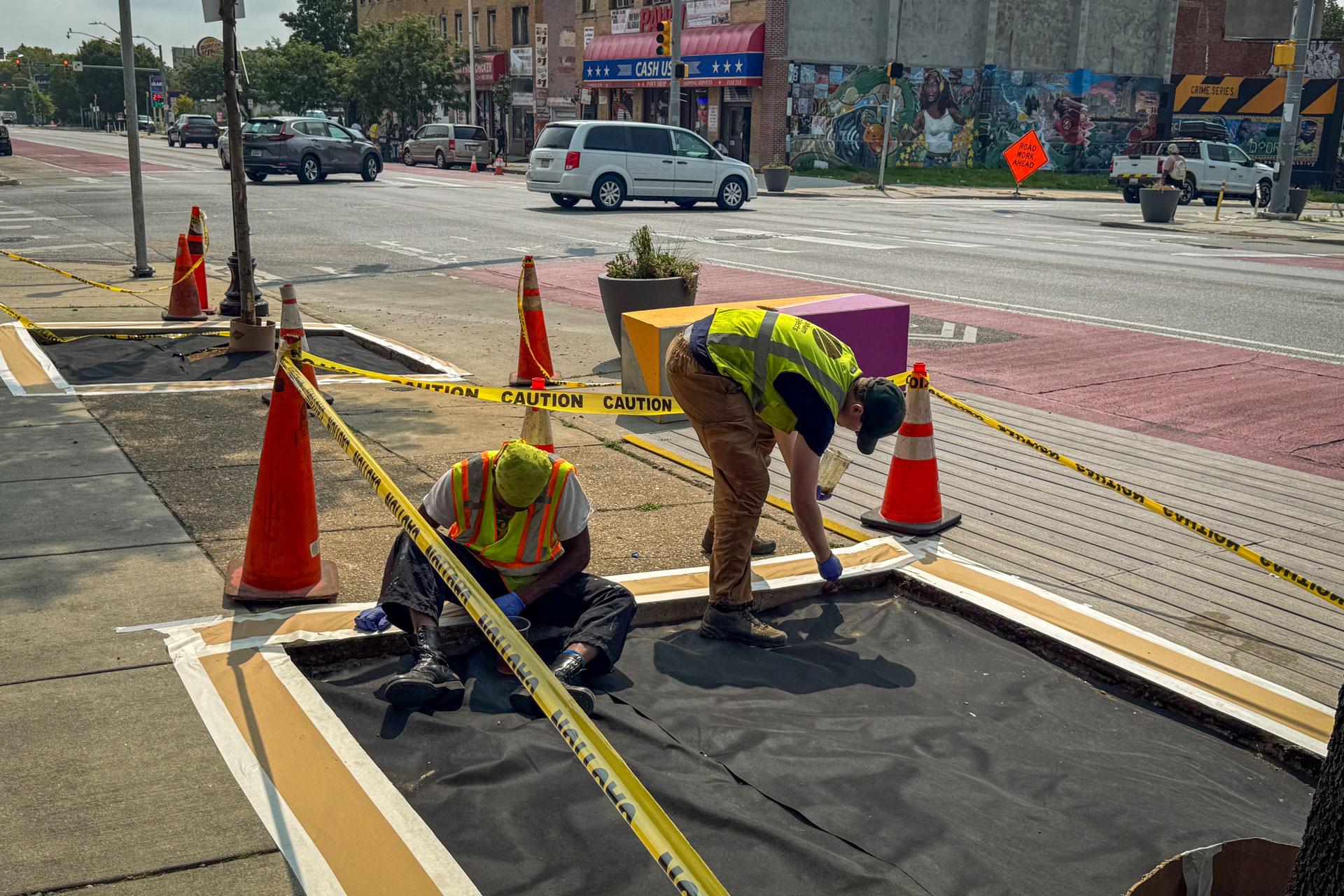
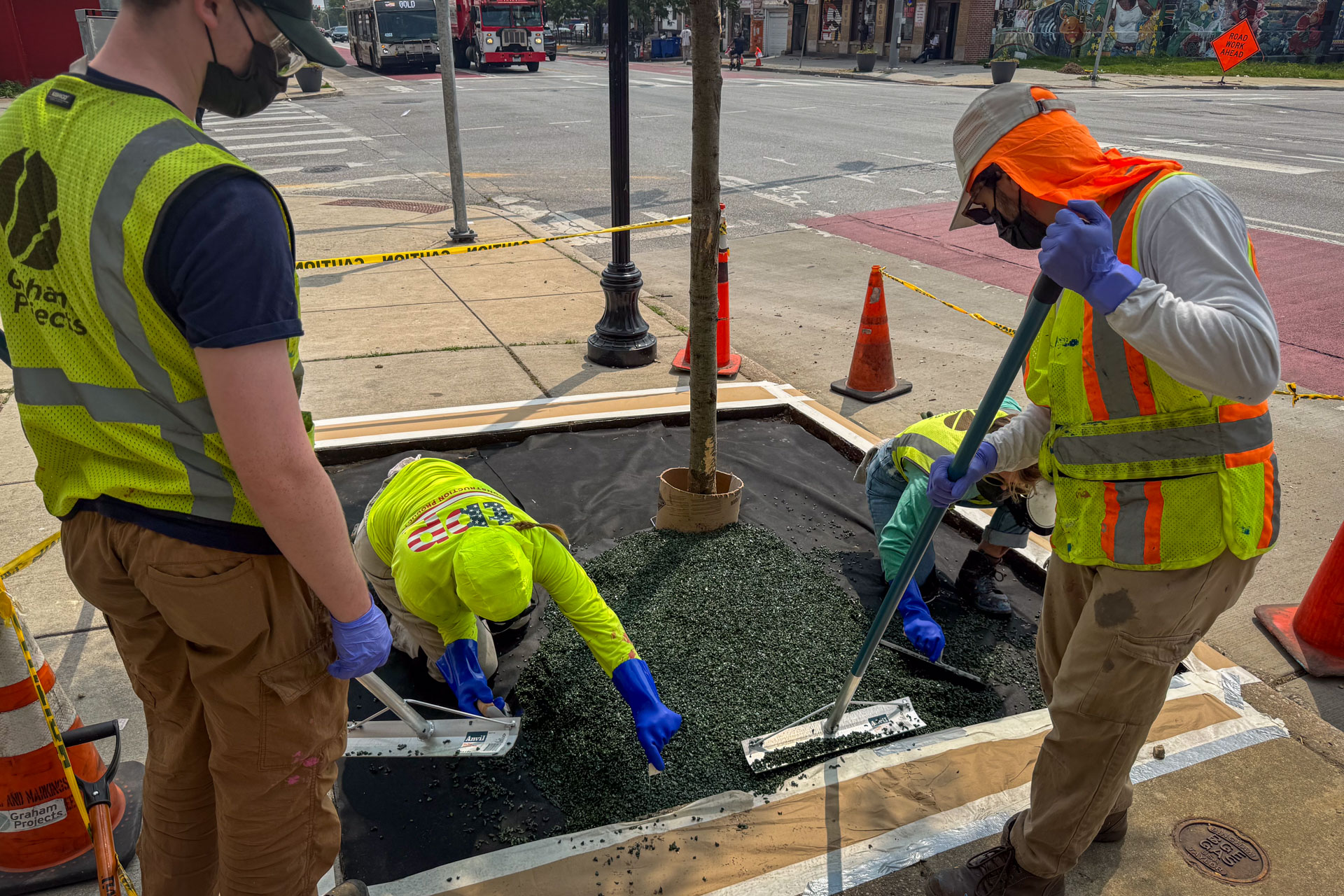
The Graham Projects team cleaned out the tree pits adjacent to the bus stop platforms and filled them with flexible rubber surfaces. The rubber paving helps to minimize accumulation of litter, which was one of the concerns we heard from the community. The rubber is pervious, allowing the tree to continue to absorb water, while also protecting the tree’s roots from compaction. The rubber tree pits maximize the accessible space around the platform for pedestrians and wheelchair riders.
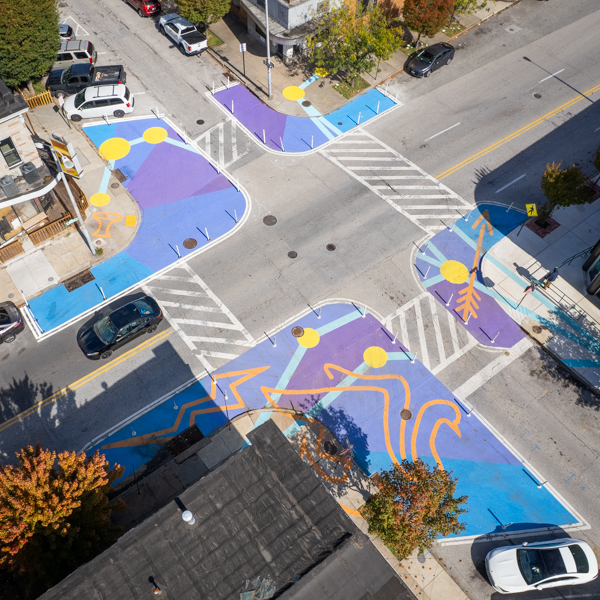
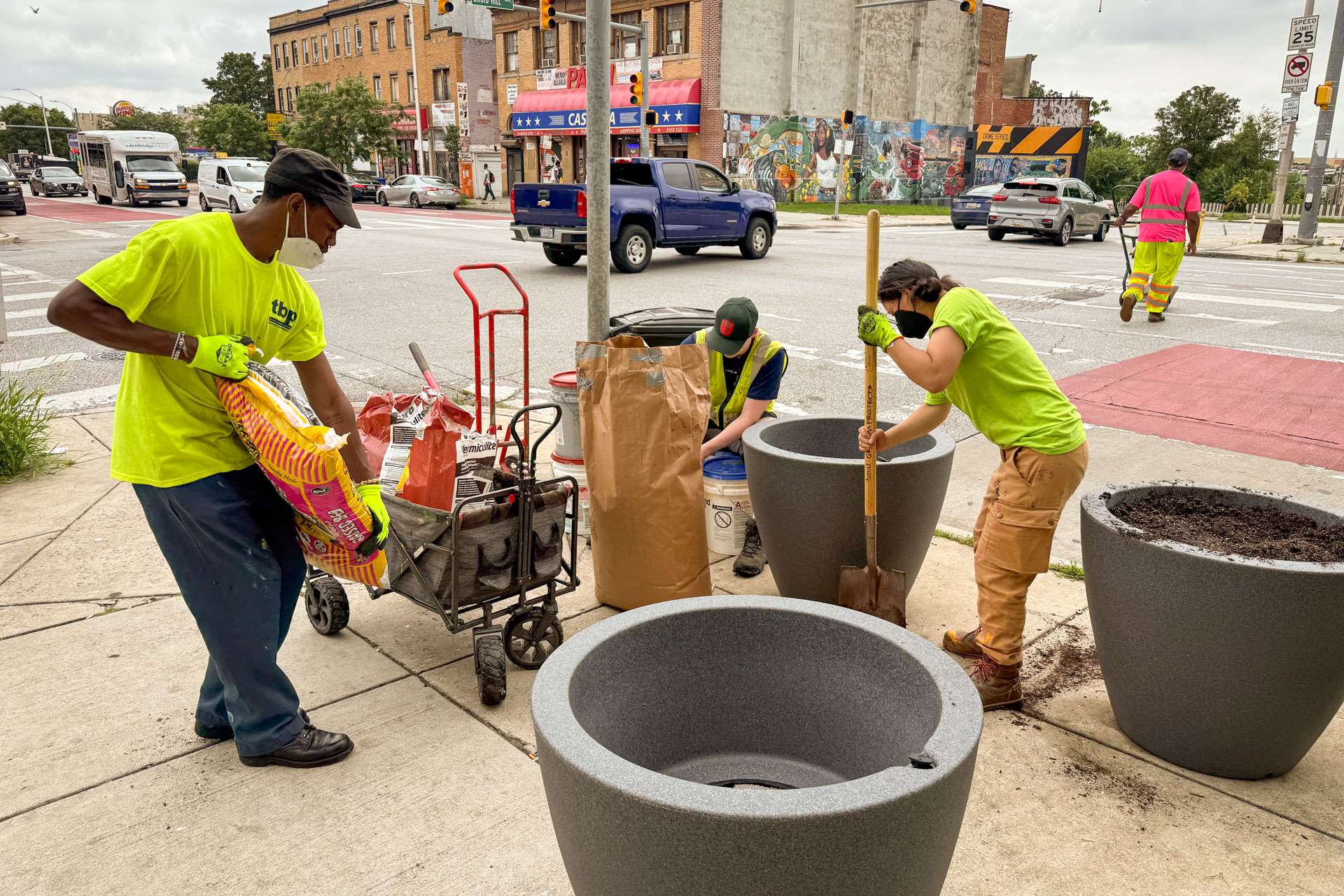
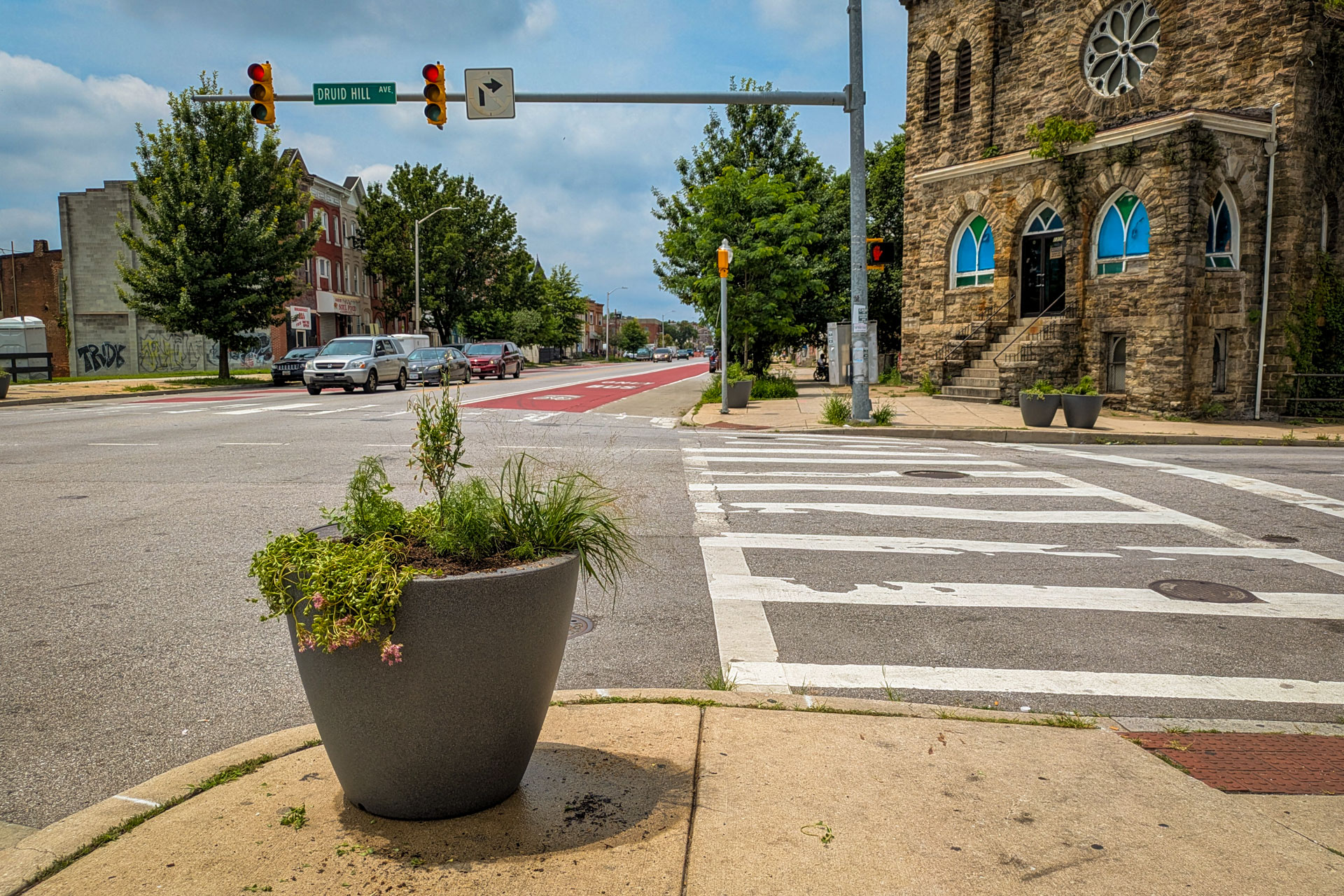
In addition to bus transit improvements, traffic calming elements include “bump outs” filled with pavement art and heavy duty planters placed around the crosswalks. The planters take up visual space in the road, creating a ‘narrowing’ feeling that encourages cars to slow down, as well as bringing much needed greenery to the intersection with drought-tolerant native plantings.
Click here to see the finished traffic calming street mural at North Avenue and McCulloh Street: grahamprojects.com/projects/taspi-dogwood-delight
Funding for this project was made possible by the West North Avenue Development Authority and the Baltimore Community Foundation.
Click here to read more about TAPSI improvements: https://northavetapsi.grahamprojects.com
Design Team: Urban design by Graham Coreil-Allen, fabrication engineering and production by OpenWorks, planting palette by Zoe Roane-Hopkins
Graham Projects installation team: Graham Coreil-Allen, Melvin Jadulang, Liam Arbeiter, Mar Braxton, Lydia Milano, Zoe Roane-Hopkins, Kirsten Pamfilis, Maurice McCrimmon, Sam Polt