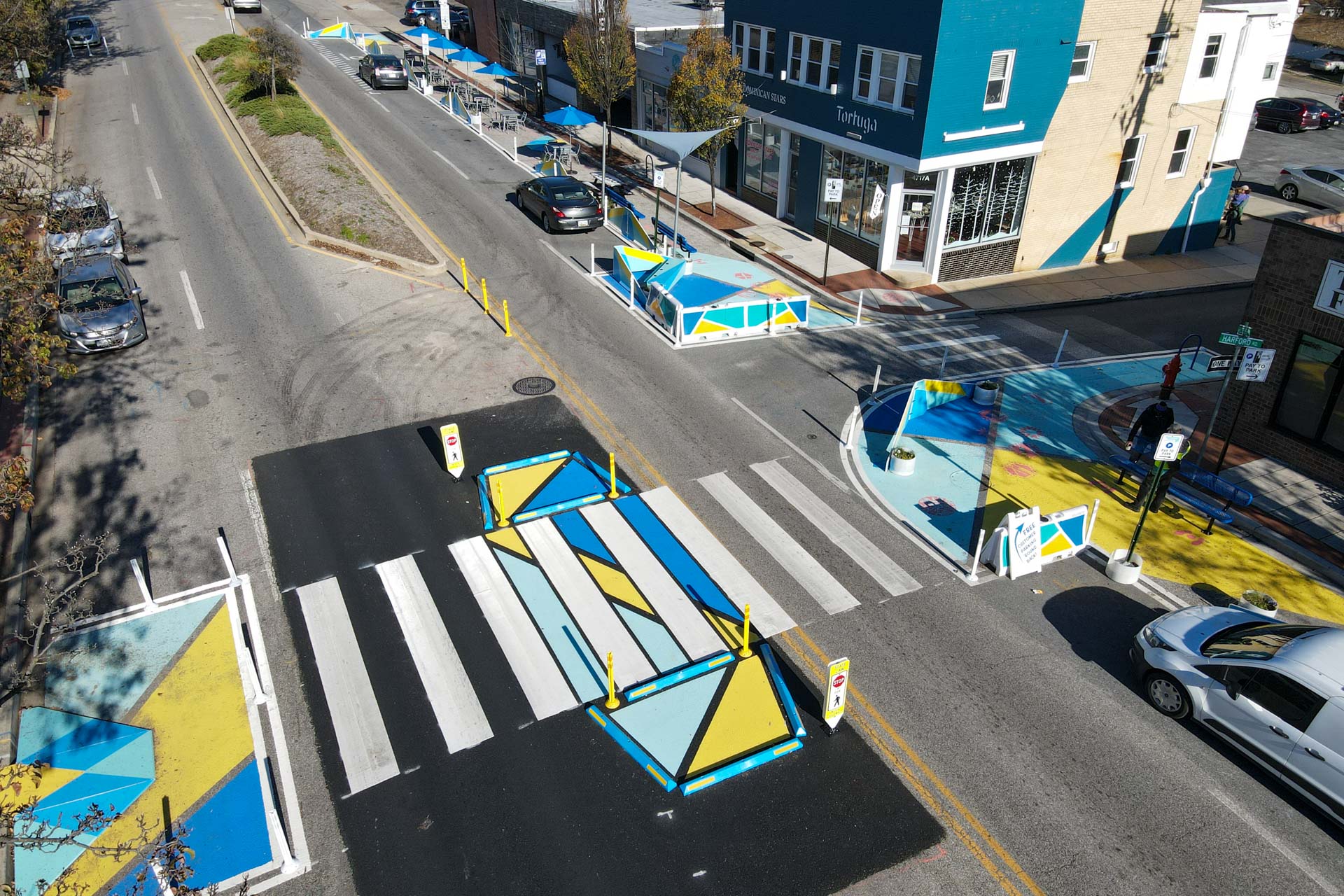
2020 proved to be an unprecedented year of challenges and innovations for Graham Projects. Due to the COVID-19 pandemic several of our public art and civic engagement projects were either cancelled or significantly delayed. Remaining projects were significantly slowed by the need to take precautionary measures in conducting community engagement and installation of our works. From these challenges arose new opportunities for remote creative collaboration and physically distancing activations of public space. We are proud and appreciative of having so many amazing partners who continue to help us improve cities through public art and civic engagement. Below are a few highlights of our work this year and the folks who made it all possible.
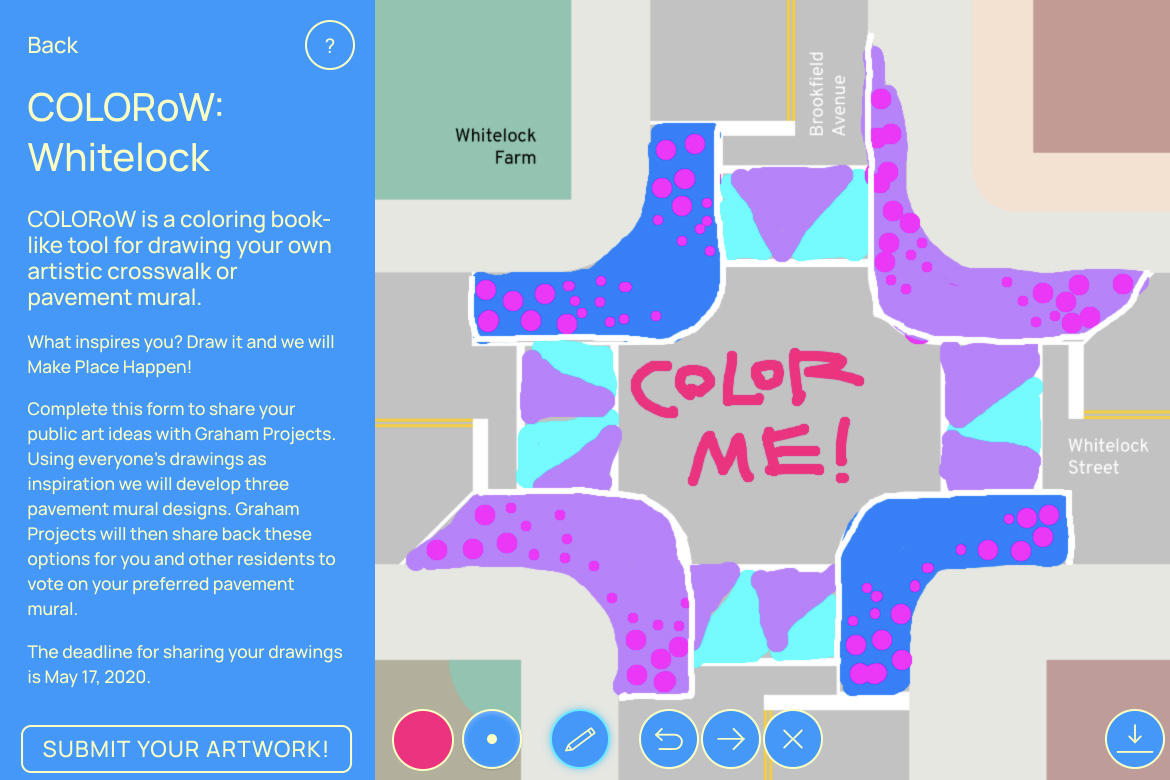
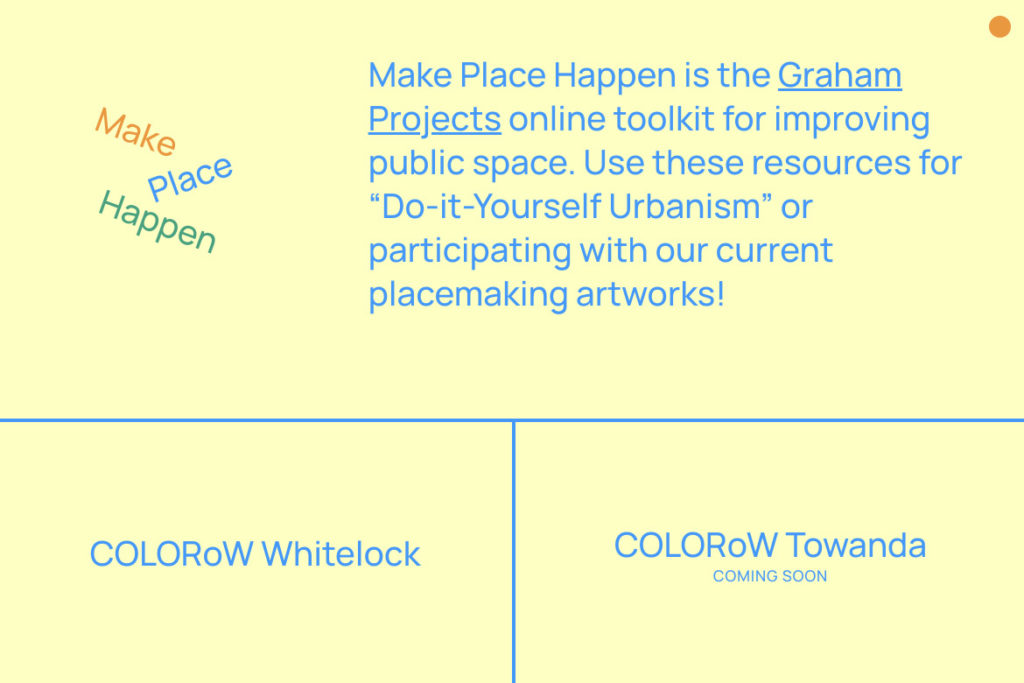
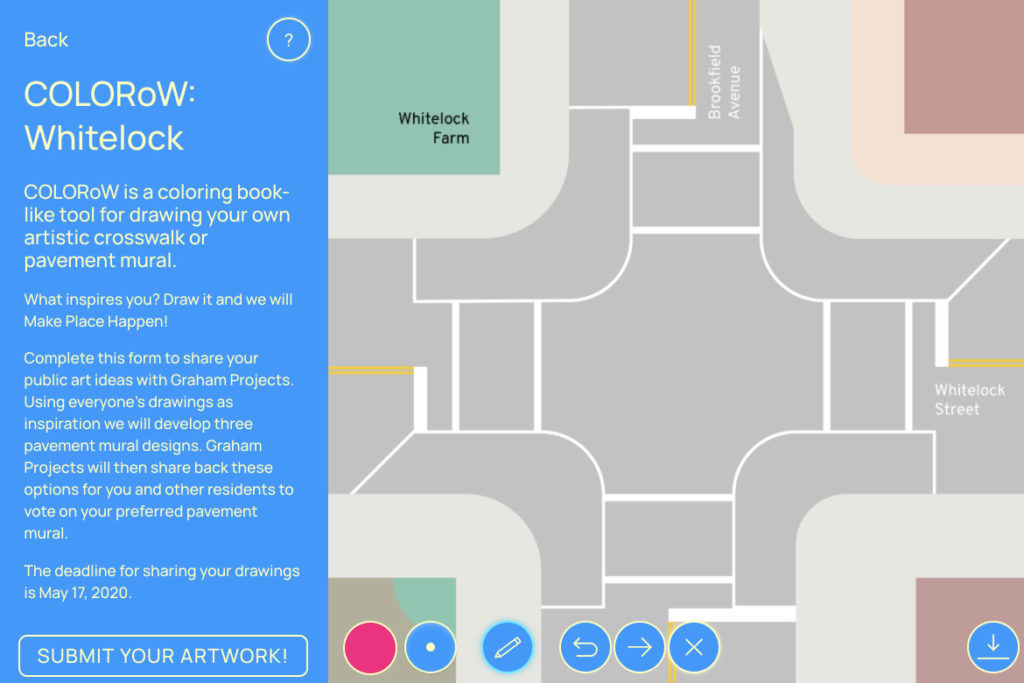
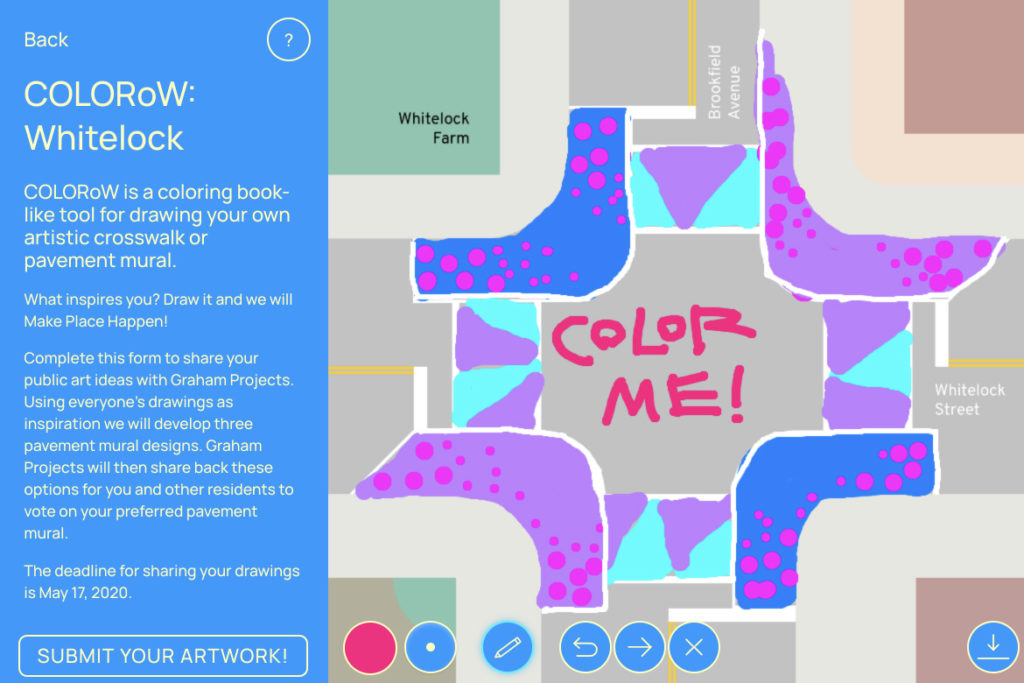
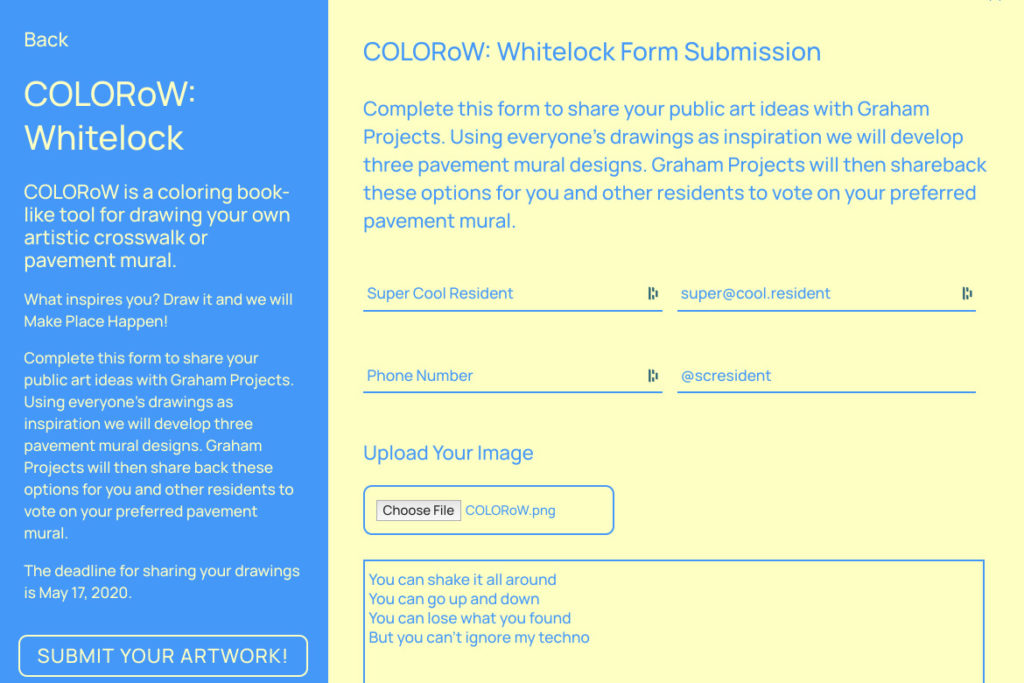
In May we responded to the limitations of in-person engagement posed by the COVID-19 pandemic by collaborating with Tobey Albright and Mollie Edgar of Hour Studio to create the online placemaking toolkit, Make Place Happen. The Make Place Happen website offers resources for “Do-it-Yourself Urbanism” and/or participating with Graham Projects’ current placemaking efforts. The most exciting feature is COLORoW, a coloring book-like web app for drawing your own artistic crosswalk or pavement mural.
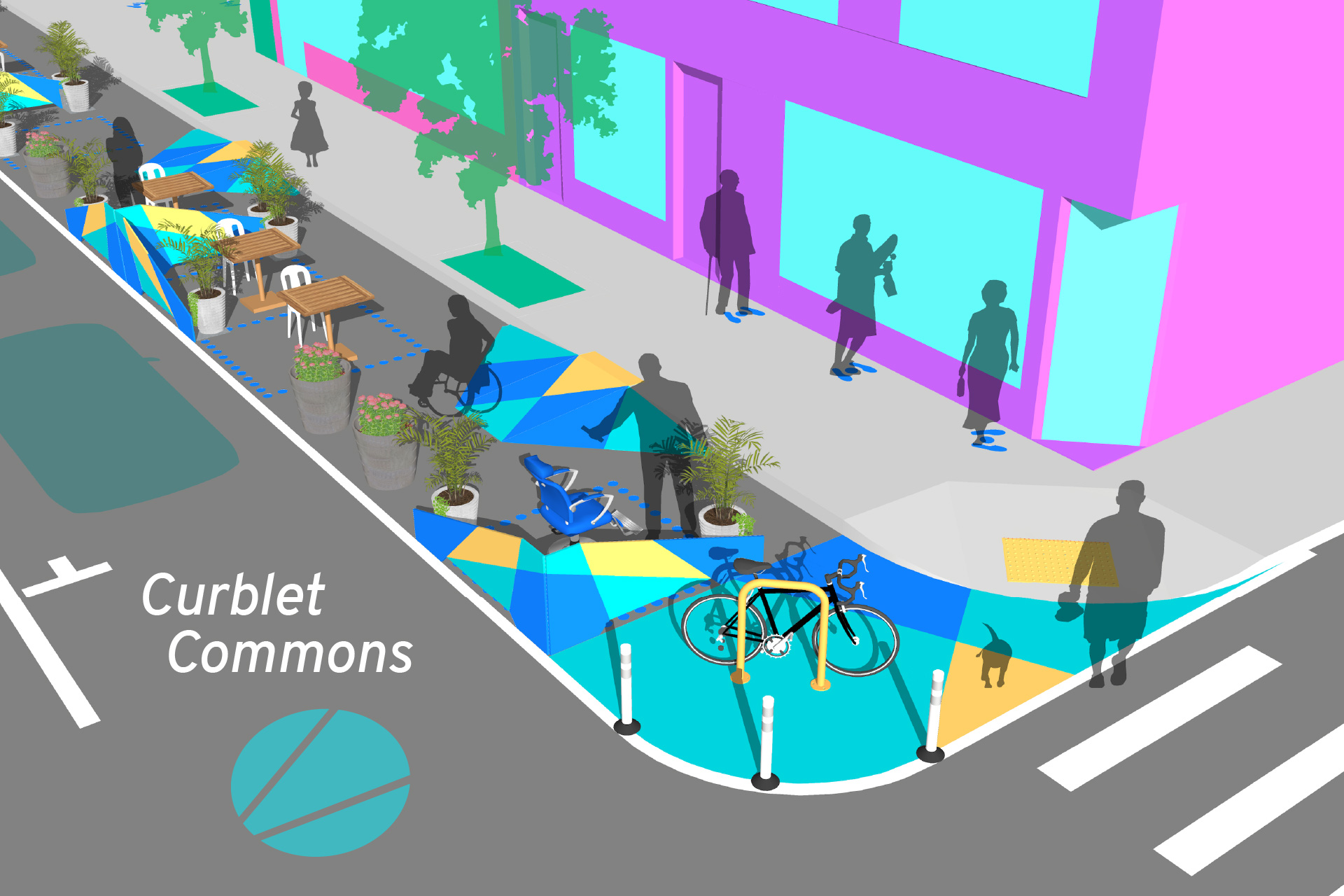
Also in May, we responded to Neighborhood Design Center’s “Design for Distancing” call for ideas to help businesses along Baltimore’s main streets safely reopen using spatial distancing outdoor public space enhancements. The Graham Projects Curblet Commons design kit transforms an on-street parking lane into an accessible, safe, and inviting pedestrian space including creative ADA curb ramps, modular barriers, and physical distancing stencils. Out of over 160 submissions, the Curblet Commons open source accessibility designs were one of ten selected for the Design For Distancing Guidebook. This free guidebook provides COVID-19 safe placemaking inspiration for businesses, cities, and people worldwide on how to safely reopen and improve their own public spaces. Click here to download the free Design for Distancing Guidebook.
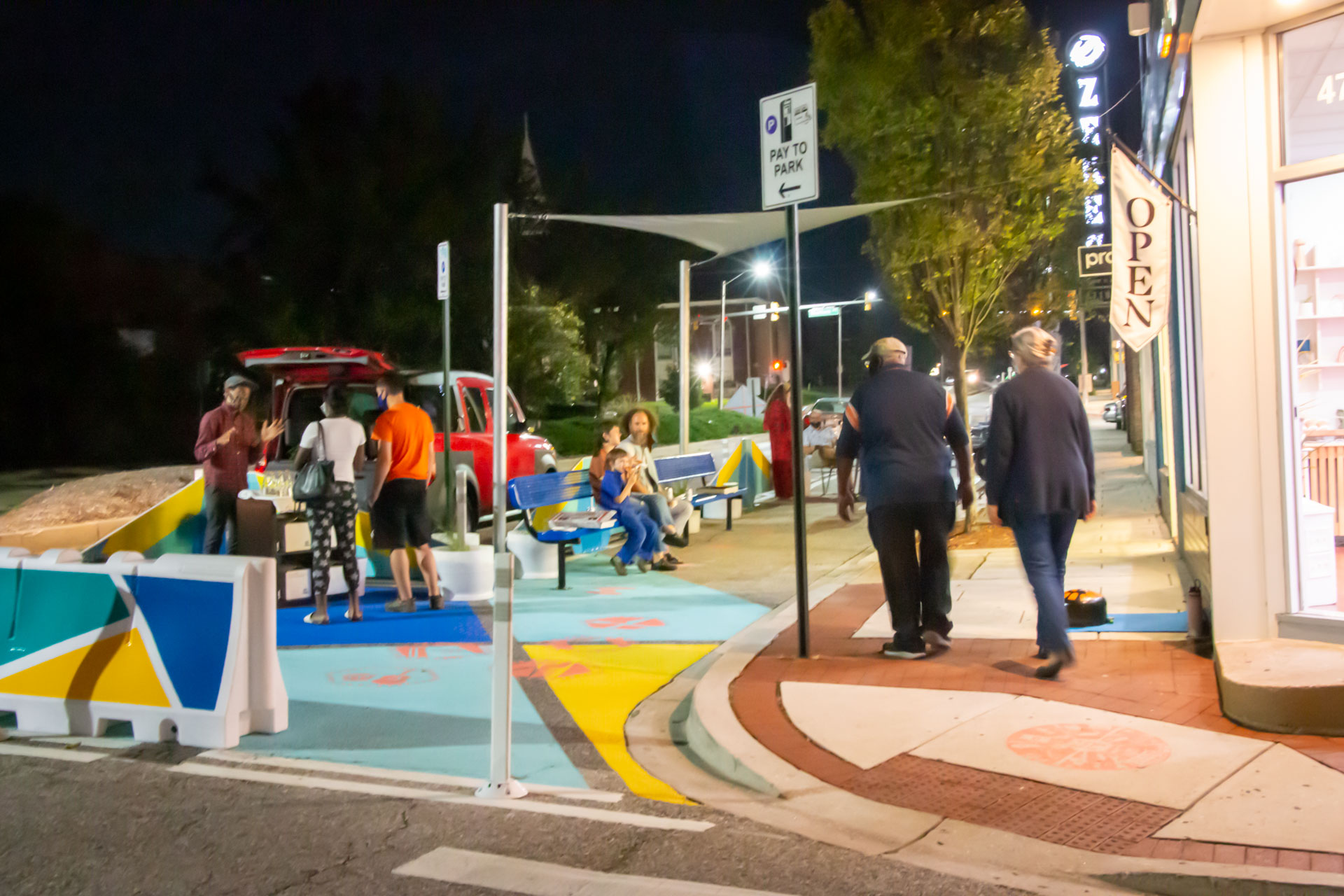
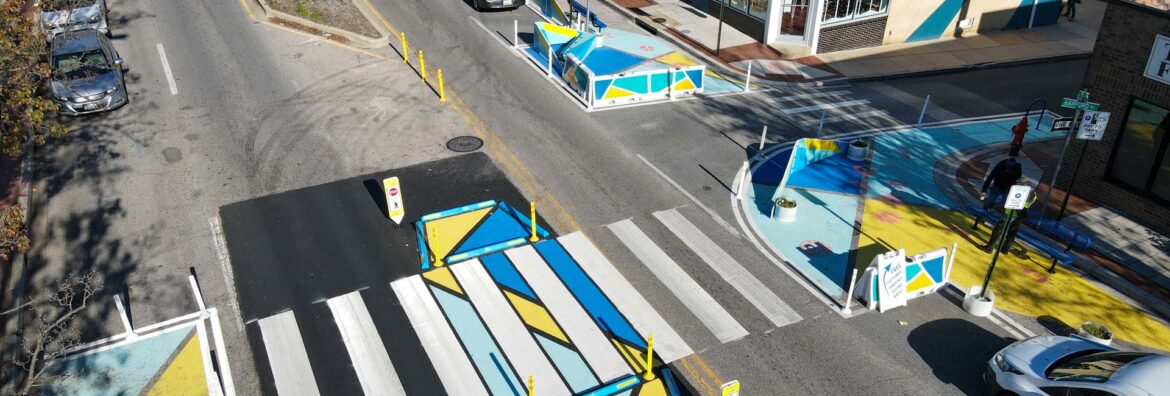
Soon after seeing our designs accepted into the Design for Distancing guidebook, we partnered with Hamilton-Lauraville Main Street, Property Consulting, Inc., LANNINGSMITH, and Annie Howe Papercuts to secure a large design-build commission transforming three blocks of Harford Road into a place for safe pedestrian gathering and neighborhood shopping. Our Curbside Commons Design for Distancing project converted a parking lane into a public space for community, shopping, services, and culinary encounters along Hamilton-Lauraville’s main street, Harford Road. Design for Distancing is a tactical urban design initiative of the Baltimore Development Corporation and Neighborhood Design Center intended to help small businesses in Baltimore reopen without compromising public health. We met with the adjacent small businesses to understand their needs to stay open while maintaining physical distancing and other COVID-19 precautions. In response we delivered outdoor seating, distancing markers, event space, pedestrian and wheelchair accessibility, public art, signage, bicycle parking, and artful wayfinding.
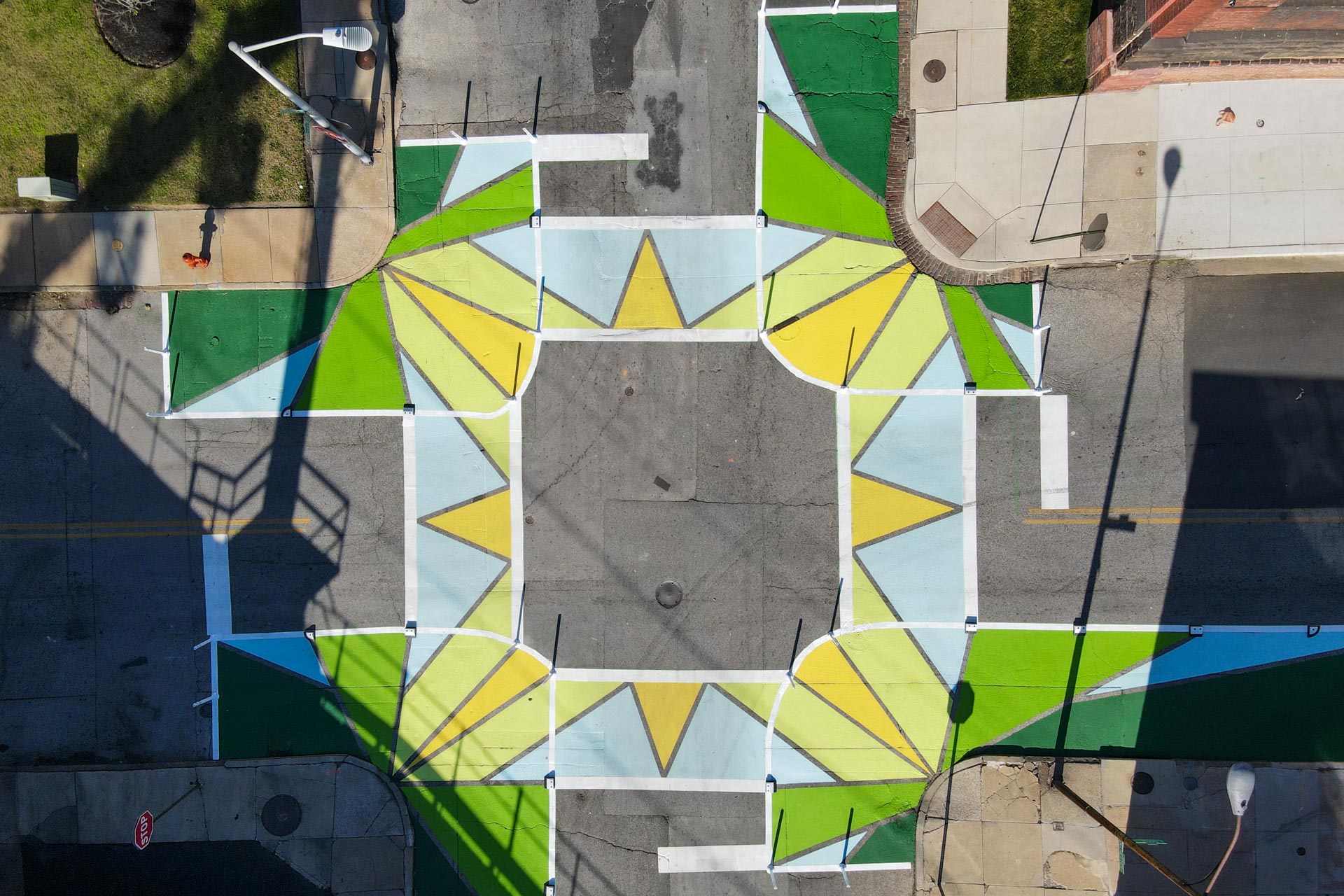
After a marathon of fall install, we managed to find a few more warm enough days to fit in one last exciting project – the Oak Wisdom art crosswalks in Colling Square. During pre-COVID community engagement, we learned that the Collington Square community of East Baltimore holds a 200+ year old Swamp White Oak tree as its symbol. Working with resident input, we designed the “Oak Wisdom” traffic calming art crosswalks and Collington Square Neighborhood Association street pole banners are inspired by looking up through those sanctuary leaves. The street pole banners elevate neighborhood identity by showcasing a positive symbol for the area – the beloved centuries-old tree that stands magnificently atop the hill in their local park. The art crosswalks and “bump outs” provide a welcome gateway to Collington Square while slowing down aggressive car traffic, improving street-crossing safety for its residents who rely on walking to get to school and work.
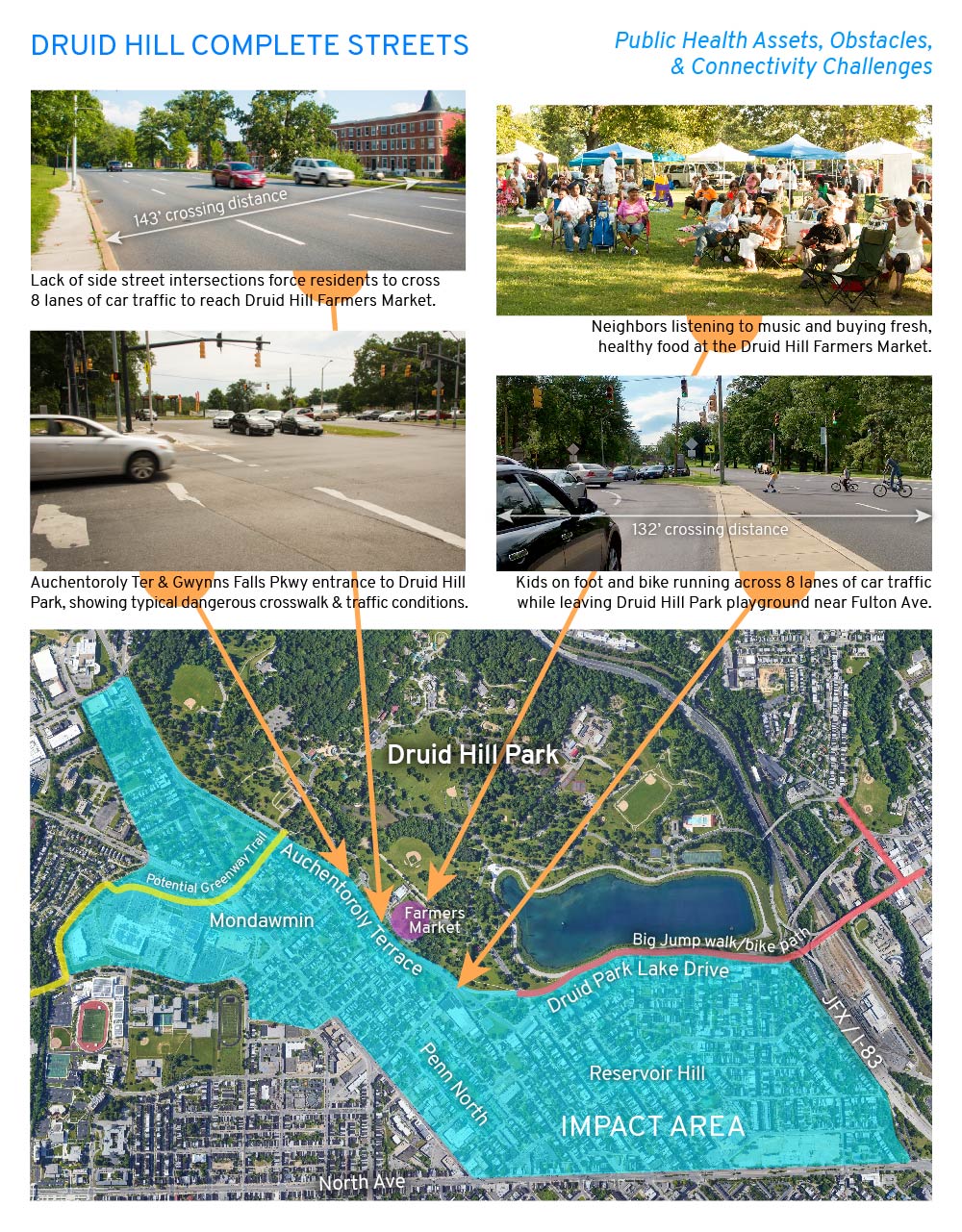
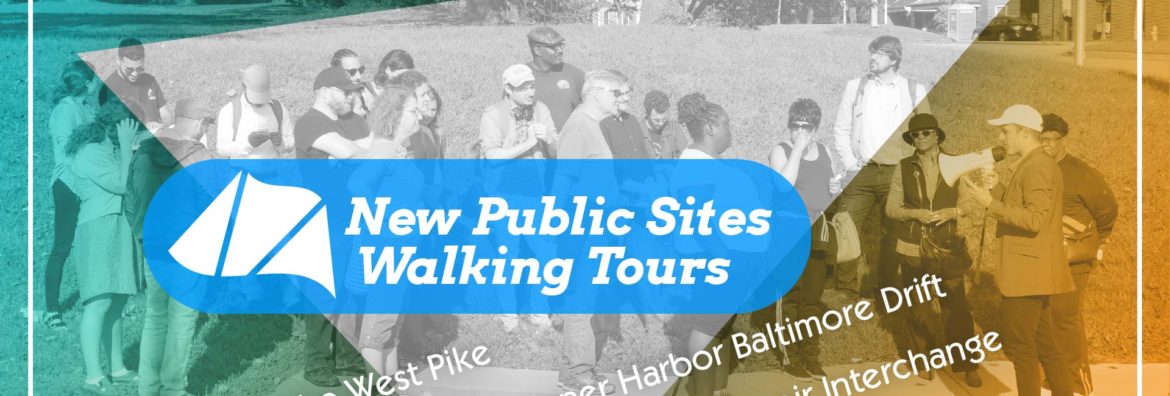
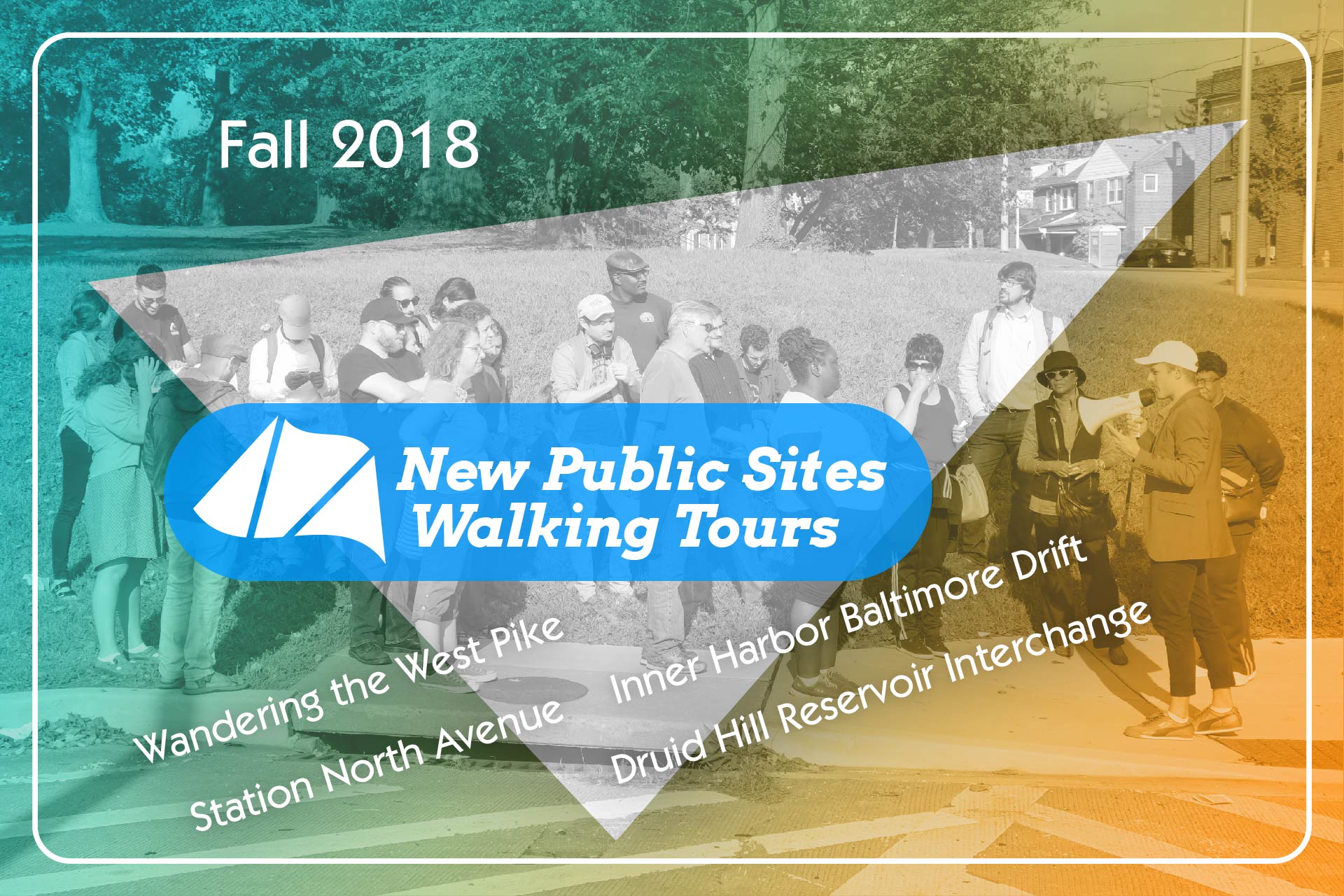
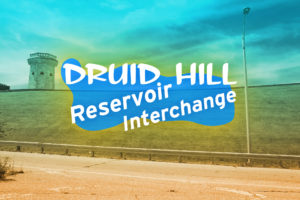

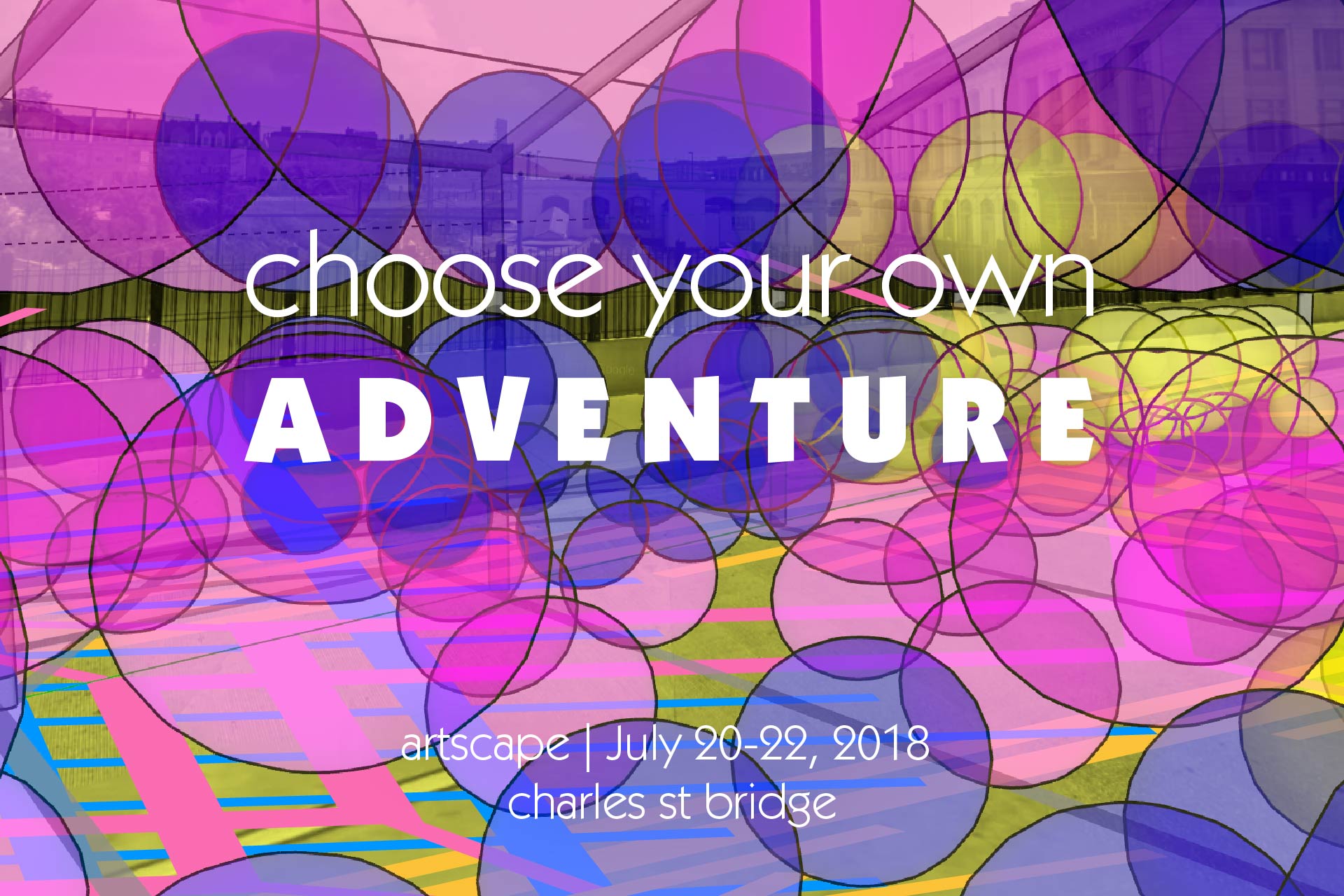
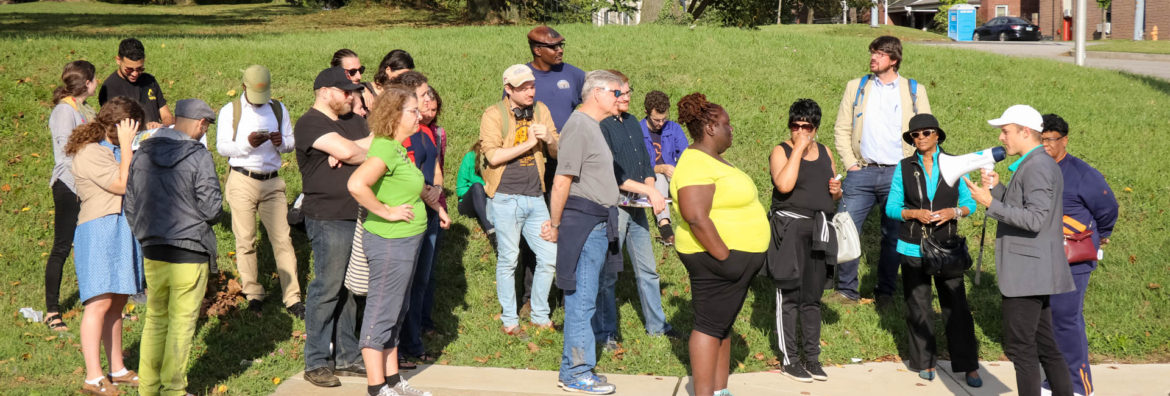
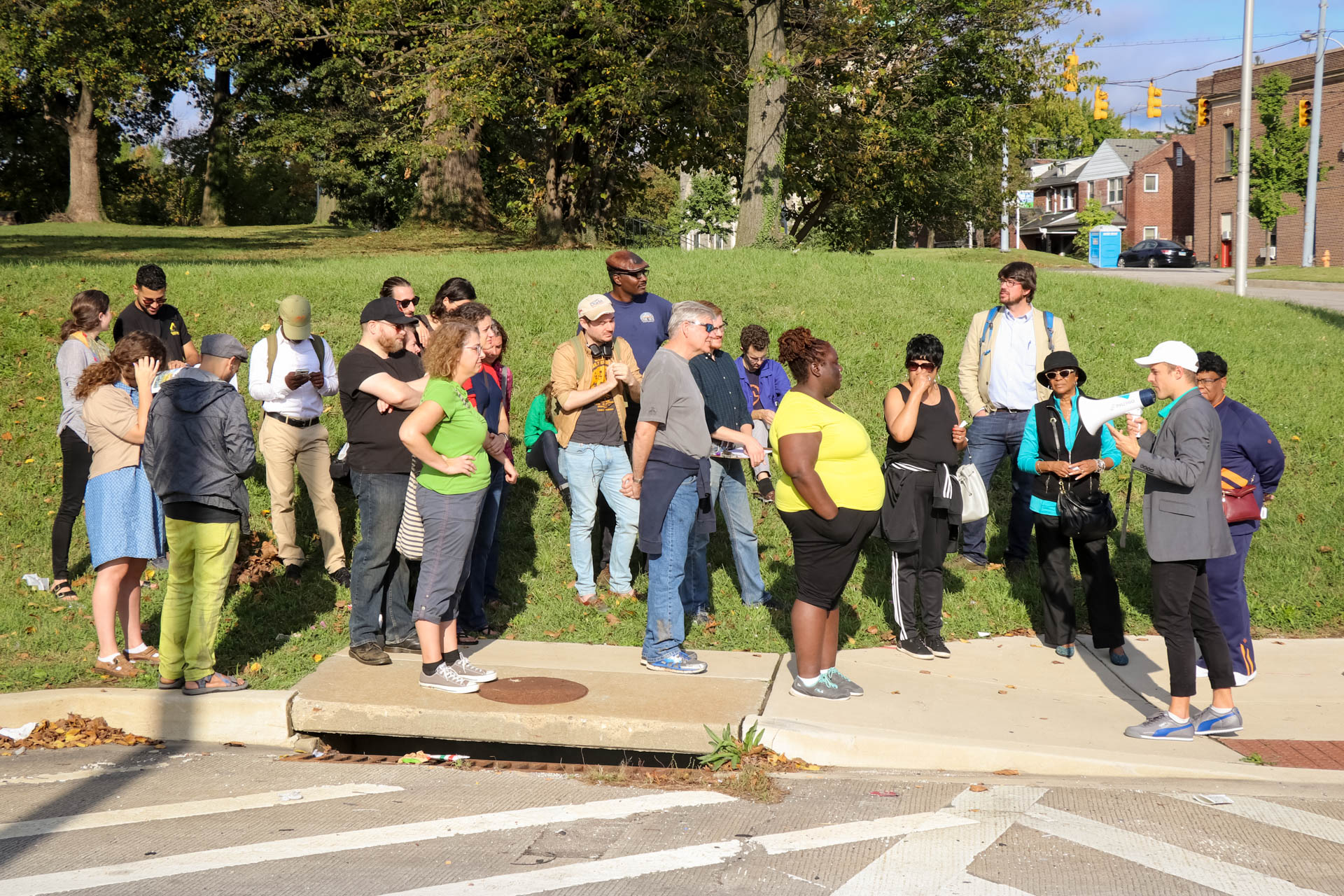
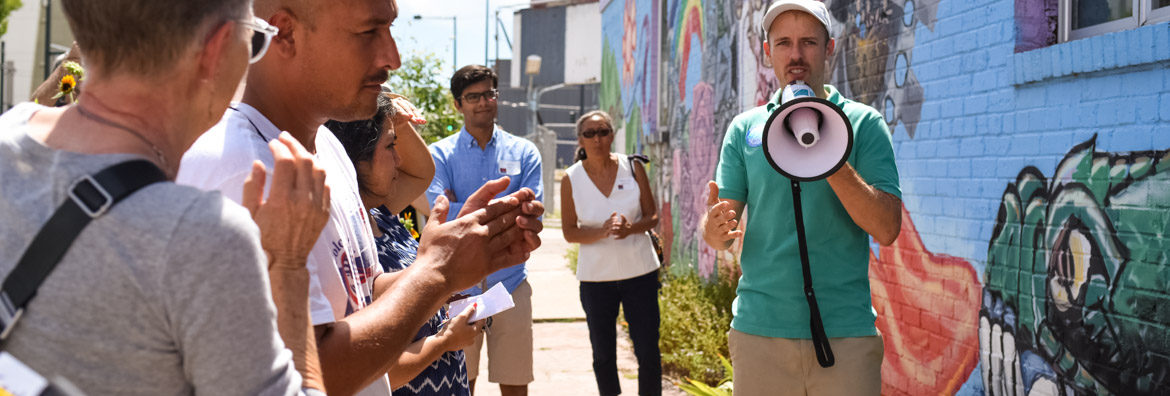
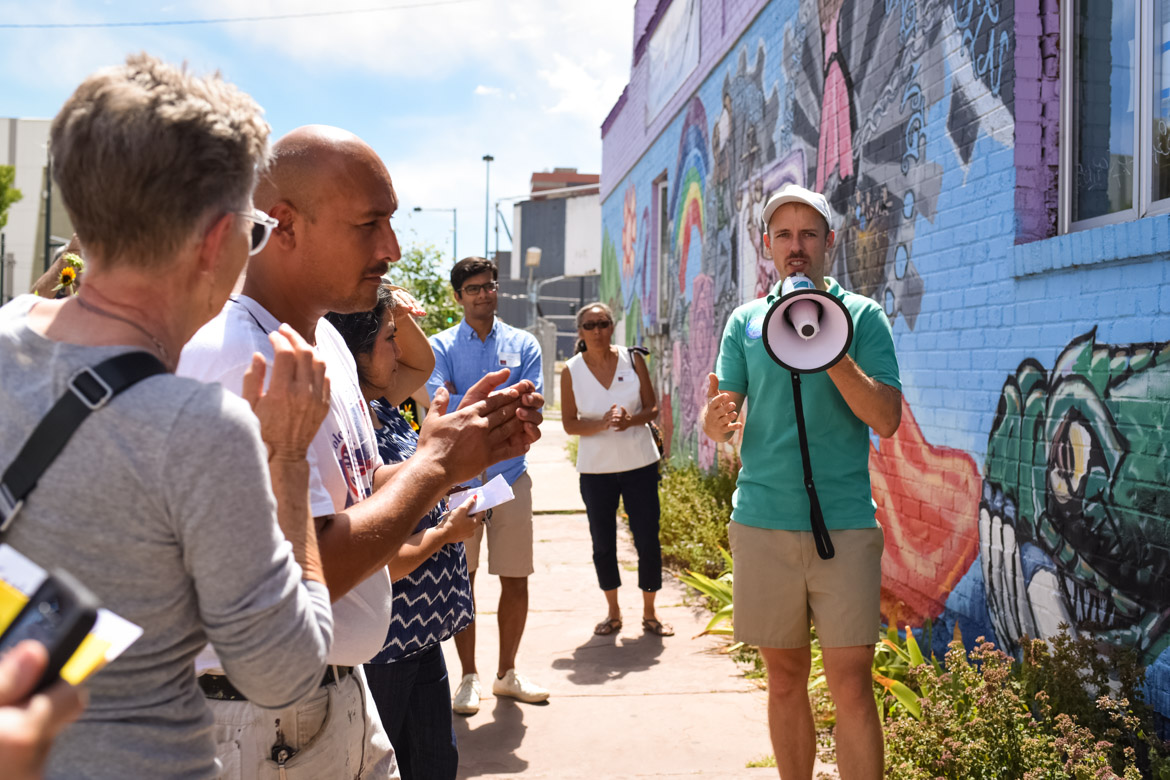
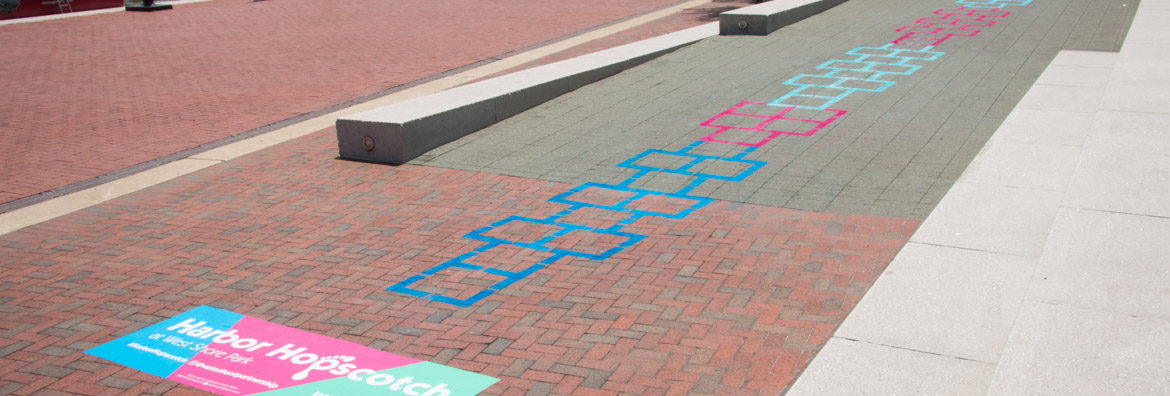
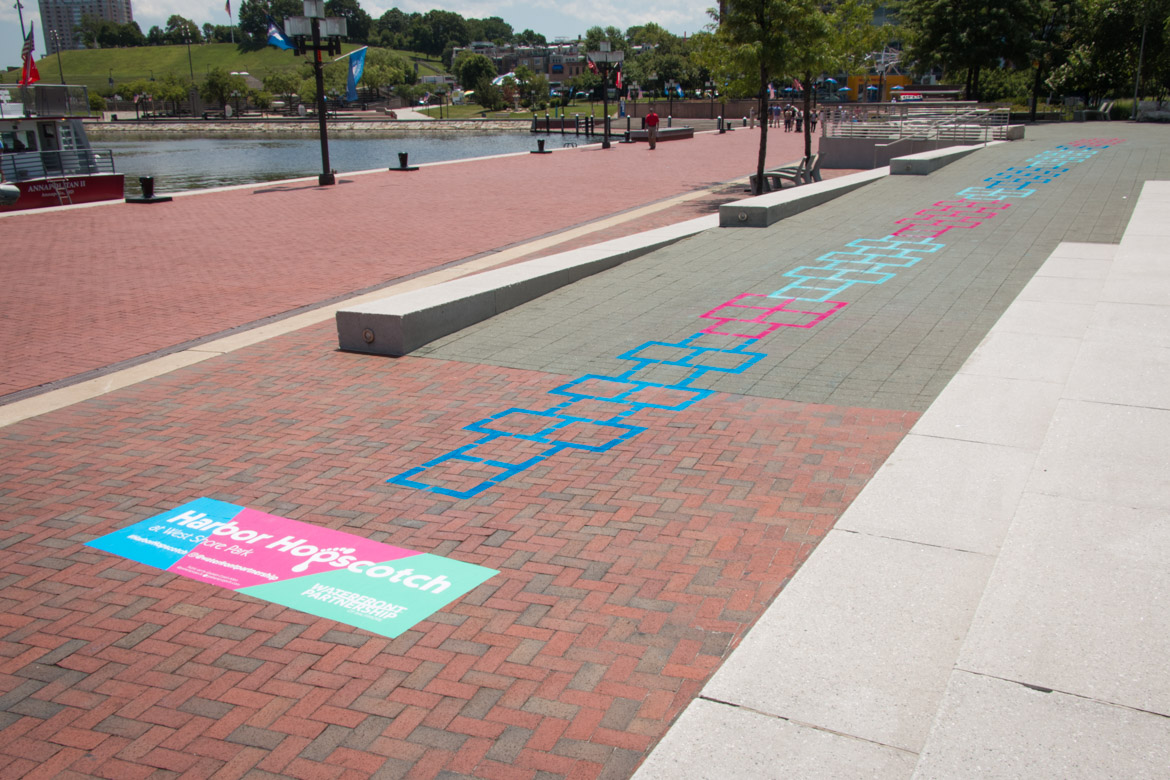
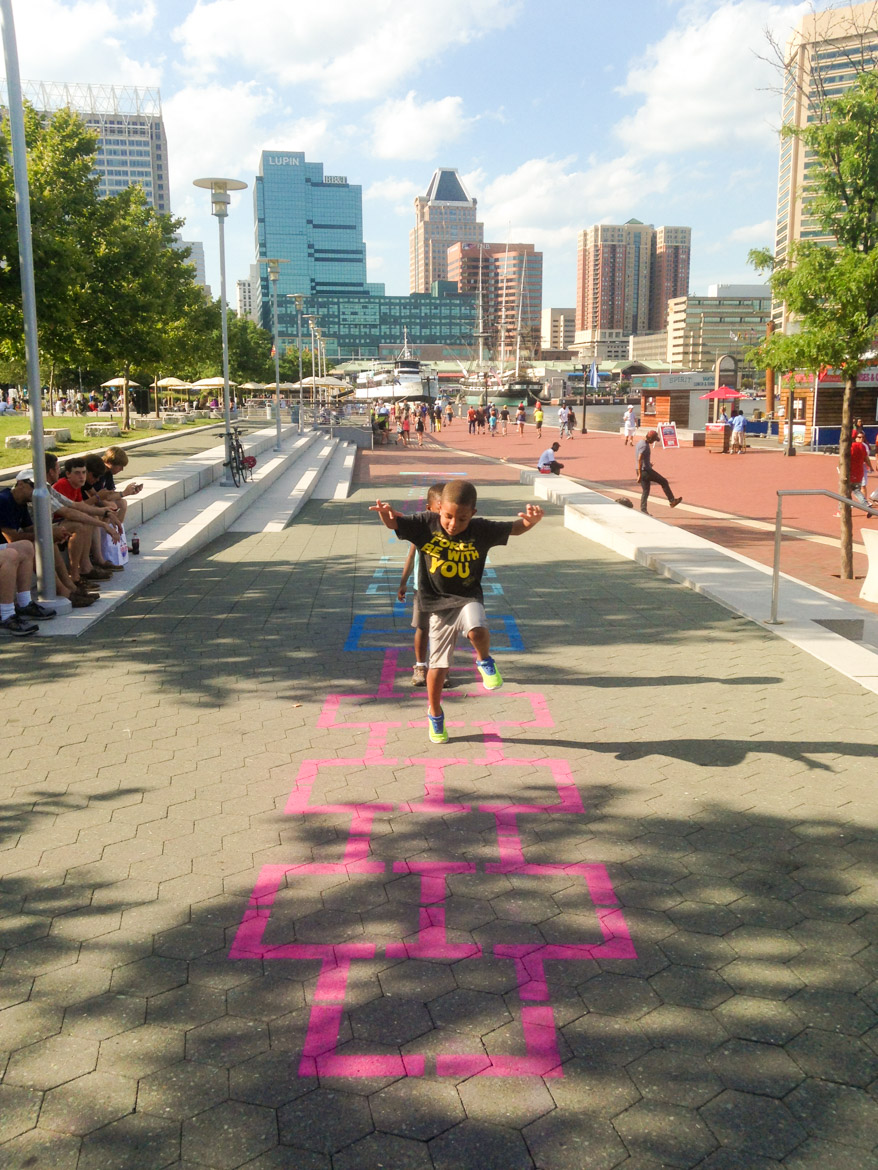
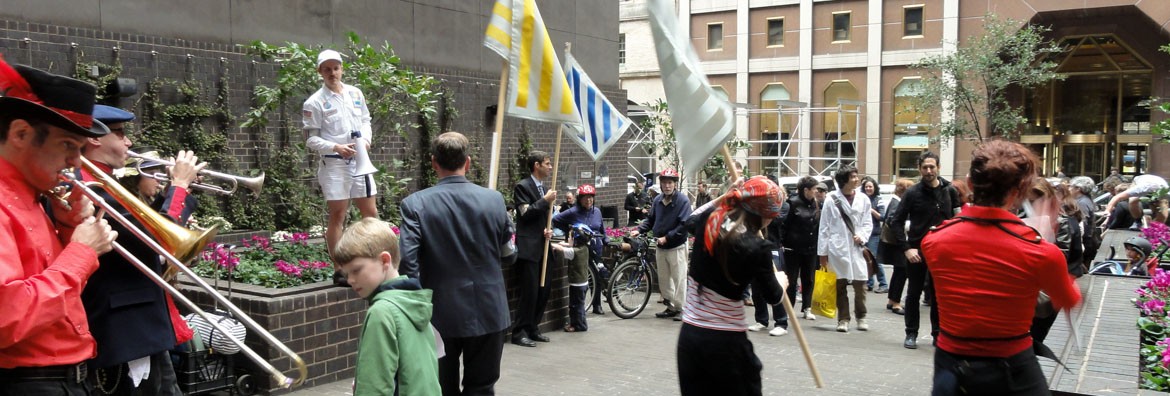
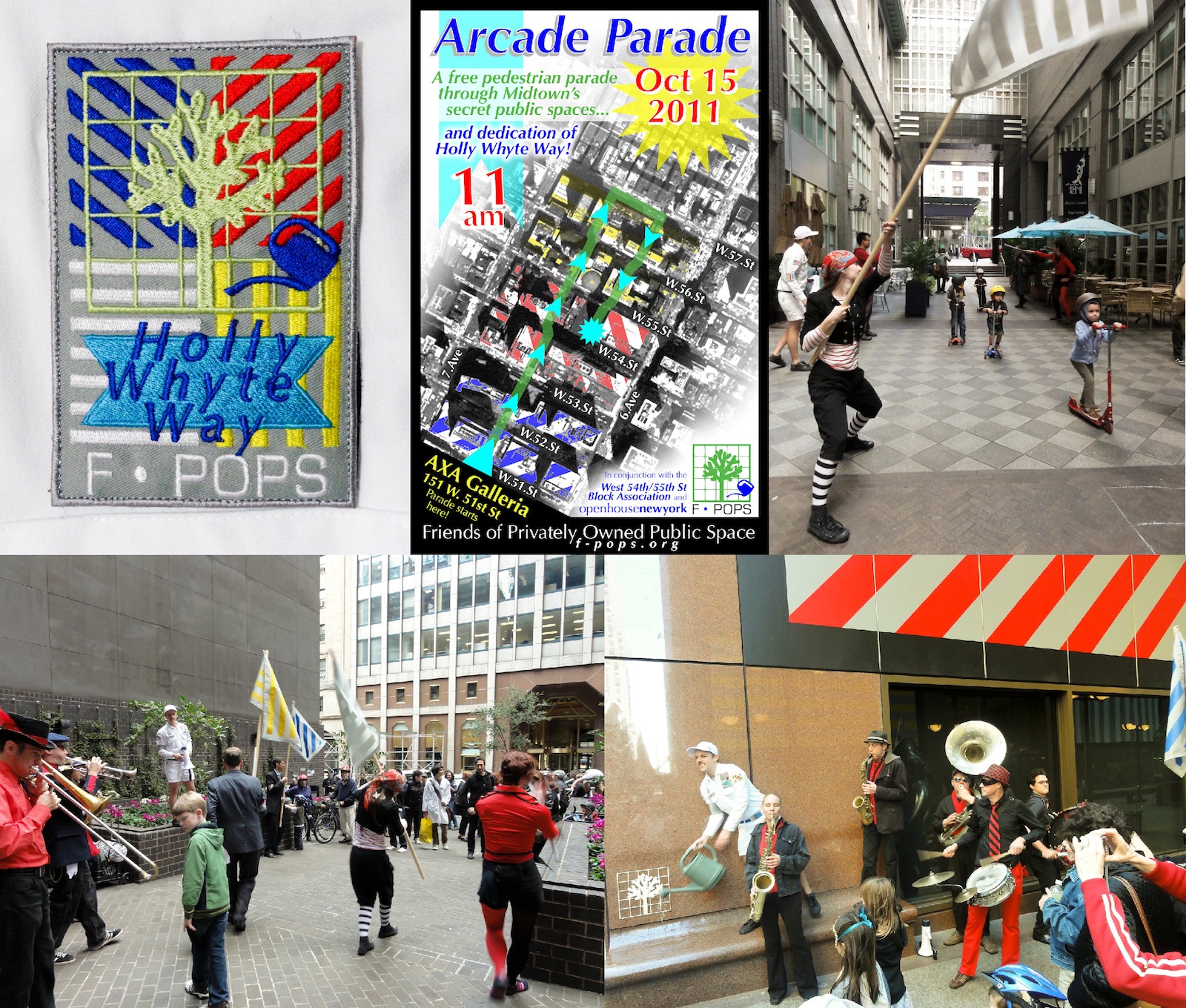
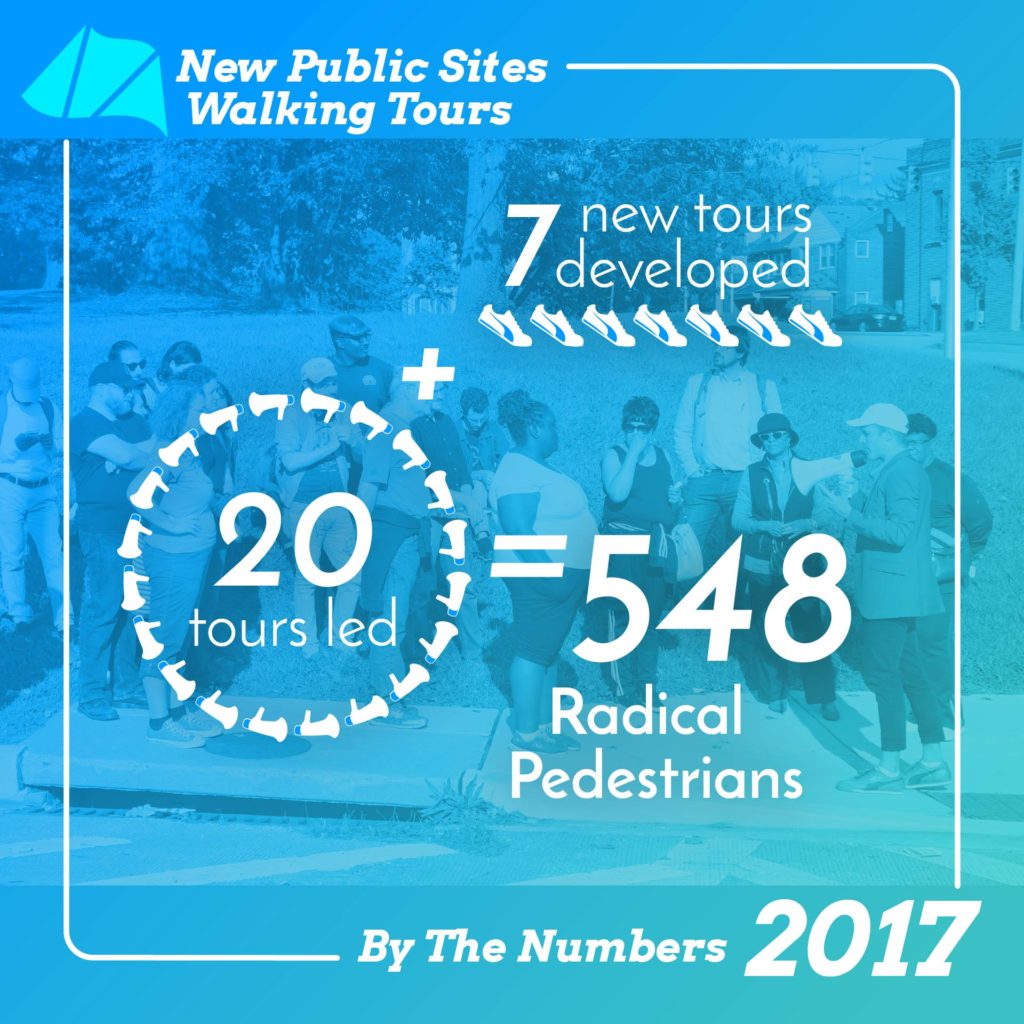 As we close out 2017 I’m thankful for the numerous neighbors, leaders, artists, and organizations I have had the honor of working with to Make Place Happen in Baltimore and beyond. From championing pedestrian accessibility around Druid Hill Park, to exploring the robust and emerging civic spaces and public art of Arlington County, to colorfully reconfiguring concrete paving for playful action, place is truly what we made of it. Public space is not just constructed out of tactile materials like pavement, landscaping, and benches, but also the intangible – knowledge, organizing, and programming. Through New Public Sites walking tours we poetically re-experienced everyday public spaces while learning from community leaders and civil servants how to affect change at the block level. Artscape showed that streets and bridges don’t have to be just for cars, but can also be spaces for ecstatic pedestrian interactions. Workshops like the Baltimore Museum of Art’s Visioning Home created spaces for inclusively mapping out creative futures for the city. I am inspired by my collaborators who believe that we can expand such temporary zones of autonomy into lasting places of accessibility, well-being, joy, and freedom.